Monday, September 28, 2015

The Poverty Wheel

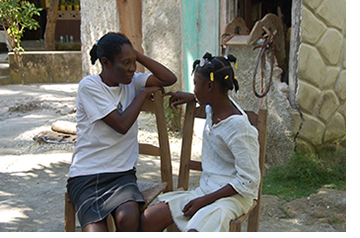
Wess Stafford, in his book Too Small to Ignore, presents the best way of understanding it that I’ve found: the poverty wheel. In the center of the wheel, the hub, there is absolute poverty. The outer rim represents enough. The opposite of poverty isn’t wealth – it’s enough. Enough food to live, enough shelter to remain safe and dry, enough opportunity to become a self-sustaining member of society, enough dignity to be the person God created you to be. The six spokes of the wheel represent the various areas of life that must be intact for “enough” to occur. The spokes are economic, educational, health, environmental, social, and spiritual. As with an actual wheel, each spoke is necessary for the stability of the whole. When one spoke is weak, it has an impact on all the others.


"Poverty is hunger. Poverty is lack of shelter. Poverty is being sick and not being able to see a doctor. Poverty is not having access to school and not knowing how to read. Poverty is not having a job, is fear for the future, living one day at a time. Poverty is losing a child to illness brought about by unclean water. Poverty is powerlessness, lack of representation and freedom."

  • Economic. This is the one everyone thinks of when they think of poverty – not enough money. In many urban areas of developing nations, there are few jobs that provide adequate income for unskilled labor. More than 1 billion people – one in five – live on less than $1 per day.
  • Education. Education equals opportunity, and without it, many stay trapped in the cycle of poverty. When education is present, people gain confidence and learn skills to become self-sustaining.
  • Health. Many don’t have the knowledge to keep themselves healthy and lack the resources to take care of themselves when they become ill. For example, one of the world’s biggest killers is diarrhea. Mothers who haven’t been educated otherwise stop giving water to children with diarrhea – thinking they have too much water in them. The children die of dehydration. Measles is still a leading cause of death in children, even though a safe vaccine has been available for 40 years. Malaria kills 1 million children each year, even though a bed net treated with insecticide that costs just $10 could save them.
  • Environment. Each year, over 5 million children die from illnesses and other conditions caused by their environments. For example, 40 million people in Indonesia don’t have access to safe drinking water, and contaminated water is one of the sources of one of the world’s leading killers, diarrhea.
  • Social. A culture or government that devalues humans deepens poverty. Child soldiers, child trafficking, a lack of education for women, unfair work practices – all are symptoms of unjust social structures and reinforce poverty.
  • Spiritual. Few of us think of spirituality when we think of poverty, but the truth is you can be economically wealthy and spiritually poor. Poverty can be a spiritual issue. Spiritual darkness causes behaviors that can create poverty, the despair that compounds it, and our own inaction in the face of it.

Sunday, September 27, 2015

Brinet , Haiti

New school bench project. 

Thursday, September 24, 2015

As I held my son.....

Take a moment and read this post from Mark Evans.
http://goo.gl/VhHYTF

Monday, September 21, 2015

To stay with....child slavery in Haiti.

The Practice of ‘Restavèk’

Haiti Restavek Slavery familyRestavèk is a traditional system in which Haitian children from impoverished homes are sent by parents to live with other families and work for them as domestic servants.
Ideally the child is enrolled in school by the host household and treated like one of the family. But often this does not happen.
For many children, the day is filled with chores. Even the youngest are expected to fetch heavy buckets of water, hand-wash clothes, carry loads to and from the marketplace, and work in the fields—often laboring for 14 hours a day for no pay. 
Children in Haiti’s restavèk system often suffer a kind of apartheid, reduced to a subjugated status in their household and in society—sleeping on the floor, dressed in rags, eating leftovers, and often beaten. Two-thirds are girls, and many are viewed by men in the family as convenient objects for sexual exploitation. Girls are often abruptly expelled from the household if they become pregnant.
Successive generations have grown to adolescence in this atmosphere of shame, neglect, and abuse. Estimates of the number of children living in restavèk range from 200,000 to 300,000.


Help end child slavery in Haiti.... Why every child we can add to our feeding programs and TenForThem program is so vital.

http://www.hopetohaiti.com/ten-for-them


Friday, September 18, 2015

New school desks for Haiti's Children !

Thank You

THANK YOU !!!
In my last newsletter I shared the need for 60 new school desks/benches in Haiti. We are opening three new schools in the community centers we built as part of our Caring House/H2H villages project. We were able to raise the necessary funds in just a few short weeks!!!
Your generous giving has led to:
  1. Over 150 children in Haiti having the opportunity to attend school, many for the first time!
  2. Employment of a team of Haitians to build the desks.
  3. Support for the local economy as all materials where purchased from the local market. 
  4. Children in Haiti now have a brighter future due to their ability to get an education. 
  5. Loads of smiles and cheers from happy children.


I want to say a special thank you to the Preston Scott Morning Show on100.7FM Tallahassee, Florida. He along with my dear friend Dr. Ed Moore, put out a challenge to Preston's listeners to donate for this cause. They raised enough funds for thirteen benches !!!

I also wanted to share this story. It is amazing who we are able to reach when our friends that receive our newsletters and FaceBook posts SHARE and then repost or forward a friend. We often receive support from people we have never had any interactions with beforehand.

One of H2H's number one fans is Doug Doebler, we have been friends for almost eight years. He is a member of the Caring House Foundation's Board of Directors, and is always quick to forward my emails to others within his network.

When Doug saw our need for the school desks, he posted it on his FaceBook page. His friend Mark Evans saw the need and immediately pledge support for an entire school!!!

From Doug, here is Evan's story.....

H2H Donors and Palm Beach Residents Mark and Deena Evans were blessed with a healthy baby boy, Mark III, on August 19, 2015.  Just hours after watching his son enter the world, Mark saw a Facebook post that H2H desired to provide new school benches/desks for the Guernsey Family Village multi purpose building we recently built with The Caring House Project Foundation.
The Facebook caught Mark's attention because the School/Church/Community Center is located near St. Marc in Haiti -- a country Mark had visited in 2007. During that trip, Mark was shocked at the conditions there, and although much progress has been made in Haiti, there is always more to do and Haiti has always remained close to Mark's heart. So Mark and Deena sent a note to H2H that they were so grateful to have their first child, a bouncing baby boy born in the good old USA, and they wanted to do something special to honor the birth of their son. 
Providing the funds for new school benches sounded like a great idea. Less than 30 days later, the benches are built and in use in the new School/Church/Community Center building. 
Thank you Mark, Deena & Mark III for your generosity.   


Friends, I know we have many supporters are not be currently able to send a financial gift yet they are finding others ways to support our efforts.

One easy way to help us is to forward our emails (like this one) to others in your network, family, friends, co-workers and churches.

We are so blessed by you standing with us, your prayers, encouragement, and gifts on behalf of the children of Haiti motivate me to press on !

If you are able and would like to send a gift today, please visit our website:

or
Mail a check to

Hope to Haiti
PO Box 180391
Tallahassee FL 32318

or Text
Keyword H2H
to 50155

TOGETHER, we are making a difference!!!
scott-sig


Thursday, September 17, 2015

Manifestations in Haiti 9-17-15


Arcahaie / mobilization: apparent calm, the protest continues


After a day in which aggression was at its peak, with the burning of a bus and the destruction of several vehicle windshield, the protesters have Archelois busy Wednesday. Traffic has resumed normally on National number 1, the small informal trade worked, found PNH.
Indeed, the protesters of the presidential decision have not abandoned their movement. A man aged about fifty years, one of the spearheads of the mobilization that lasts for several weeks, called the Head of State to reconsider its decree dated 25 July which reduced the Arcahaie of much of its territory.

Otherwise, he promises, movement experience another phase. For him, the mobilization against miscalculated territorial delimitation is rooted in history of the city where the flag was created.

'Arcahaie is renowned for its production of bananas but also for its beautiful beaches and hotels. By attaching Montrouis in the Artibonite department, Michel Martelly was a blow to the reputation of the city, '' suggested in turn a lady.

While they are dispatched in Arcahaie for the maintenance of order, of the operating Brigade officers and departmental action (boid) is adonneraient to leaving restaurant without paying.

A food market accuse members of this body and theft of physical assault on his person.
If nothing is done by the President of the Republic, the protesters say they are ready to re-offend, thus paralyze traffic as effective, according to them, to make their voices heard.

Meanwhile, this territorial delimitation effected by Michel Martelly by simple decree and provoking discontent of the population archeloise was recovered politically. In fact, the presidential candidates already promising to withdraw the Presidential Decree in the event of victory in the 2015 elections.


H2H table top display

Wednesday, September 16, 2015

Compassion = Action !

The most inspired, motivated, and driven people I know are the ones who live their lives from the energy of their holy discontent. They have a constant awareness that what is wrecking them is wrecking the heart of God.” Bill Hybles quoted from his book, Holy Discontent.

 One of every three deaths in Haiti is that of a child. With most people earning less than $1 a day, many do without medicine. Death during childbirth is the second leading cause of death among women.

 H2H got mad as ...... so we moved from compassion into action, addressing as many of these needs as possible, when capable head on !!!

 YOUR support makes that happen.

Help us Help them. www.hopetohaiti.com

Education, food, clean water, medical, job creation, and loving unconditionally has driven our efforts.


Tuesday, September 15, 2015

2073 days .........

January 12, 2010. Five and a half years after that tragic day .....
The intense international focus that followed reflected the outpouring of global sympathy. Five years later, Haiti is considerably less in the headlines. This can be a good thing as it indicates progress toward recovery and normalcy. But Haiti will require our sustained attention for years to come.
To be clear, notable progress has been made since 2010. There are positive indicators in economic growth, job creation, basic health, access to primary education, shelter for displaced persons, security and crop yields. Foreign assistance helped, but Haitians deserve most of the credit. There still is a long way to go, and further progress will require good decisions by the Haitian government and sustained international support.
With your faithful support we are brining HOPE to HAITI.


www.hopetohaiti.com

Saturday, September 12, 2015

Food for hungry children in the USA.


Great morning packing 725 backpacks of food so that children in Leon County have something to eat over the weekend. Thanks to all my friends of my Rotary Club of Tallahassee for this tremendous effort. 

EVERYONE maybe international relief is not your cup of tea. Start in the community where you live - volunteer efforts are all around you. 

Together WE will make a difference in the world. 

Thursday, September 10, 2015

Addressing Haiti's Housing Crisis


Amnesty International’s new report: “15 minutes to leave” - Denial of the right to adequate housing in post-quake Haiti documents the tragic lack of progress made rebuilding the country since the 2010 earthquake five years ago and finds:

1. More than 2 million people were left homeless after the earthquake that struck Haiti on 12 January 2010.

2. According to the latest data (September 2014) 123 camps for internally displaced people (IDPs) remain open in Haiti, housing 85,432 people.

3. Conditions in many IDP camps are dire. A third of all those living in camps do not have access to a latrine. On average 82 people share one toilet.  

4. Forced evictions from camps are a serious and ongoing problem. More than 60,000 people were forcibly evicted from their shelters in makeshift camps since 2010. About a quarter of those remaining in camps are at risk of forced evictions. Amnesty International has documented six cases of forced evictions from IDP camps and informal settlements hosting IDPs since April 2013 alone. More than 1,000 families were affected. 

5. Around 37,000 houses are known to have been repaired, rebuilt or built. However, less than 20% of the housing solutions provided as a response to the disaster could be seen as long-term, or sustainable. Instead most programmes have simply provided temporary measures, such as the construction of temporary shelters and the allocation of rental subsidies.

6. Rental subsidies are a common method used by the government and humanitarian organisations. Subsidies of US$500 are handed out to help people pay rent in private accommodation. However, a 2013 survey found that nearly half of those that had been receiving grants had to move out of their homes once the grants ended. Three quarters were forced to move into sub-standard accommodation.

7. Canaan, a large area in the outskirts of Port-au-Prince, has seen its population grow exponentially since the area was declared for public use in March 2010. It is now estimated to be home to around 200,000 people. Many of the residents are people made homeless by the earthquake. In the absence of state interventions in the area, people are building their houses as best as they can and have created their own, often inadequate ways to cope with access to water, waste management and security. Many people in Canaan live under threat of being forcibly evicted.

8. Several infrastructure projects are being undertaken as part of the post-earthquake reconstruction. However, hundreds of families have been forcibly evicted from downtown Port-au-Prince in May 2014 in order to clear the area for the construction of public administration buildings. 

9. There was a crisis in the housing sector even before the earthquake. Then Haiti’s national housing deficit was estimated at 700,000 units. At least another 250,000 houses were destroyed or badly damaged by the earthquake. Housing was the sector most affected by the earthquake, with a total damage of US$ 2.300 billion (approximately 40% of the overall damage of the earthquake).

10. The problems in Haiti persist despite the US$13.34 billion pledged by the international community and financial institutions in humanitarian and recovery funding during the post-earthquake response.

Through 2015 we have built 170 homes, 4 community centers, and provided clean water and a renewable food sources for hundreds of Haitians. We will break ground on a new village in Brinet, Haiti in September 2015.


Help us continue these housing efforts in Haiti.


DONATE TODAY


www.hopetohaiti.com


Since 2012 with our Strategic Alliance with the Caring House 


Foundation Project is meeting these challenges head on with our 


village construction projects.